
In the world of high-speed beverage production, dissolved oxygen (DO) is the ultimate invisible enemy. It threatens shelf-life, ruins flavor profiles, and creates chaotic instability at the filler. While many facilities treat deaeration as a “black box” process, the difference between “good enough” and “precision engineered” can be measured in thousands of dollars of lost product and utility waste.
We sat down with the engineering team to discuss the physics of gas removal and why modern high-throughput lines are moving toward specific spray-vacuum and dry-pump technologies.
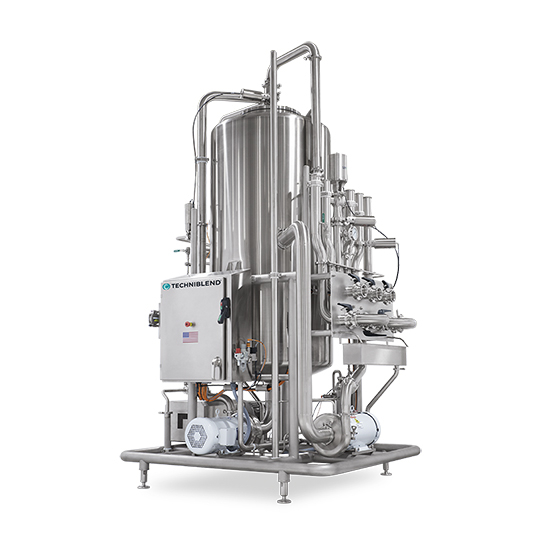
Why is Surface Area Physics Critical for Oxygen Removal?
At its core, deaeration is a game of surface area. Standard alternatives often involve bubbling gas through tall columns, mechanical centrifuge separation, heating incoming water, or some combination thereof. However, maintaining moving parts and heating requires a double utility hit: you pay to heat the water to release the gas, and then you pay to cool it back down for production.
The engineering logic behind a spray diffuser system is much more elegant. By forcing high-flow water through a series of micro-perforations in a static spray tube, the system creates millions of tiny droplets within a vacuum tank.
The Benefits of the “Small Droplet” Approach:
- High Surface-Area-to-Volume Ratio: Small droplets expose a significantly higher percentage of the water’s mass to the vacuum, allowing air to escape instantly.
- Static Design: With no moving parts, the system is virtually maintenance-free compared to mechanical alternatives.
- Precision Displacement: Nitrogen can be introduced to further displace oxygen. The vacuum then pulls the nitrogen back out, leaving the water essentially “gas-neutral.”
- Scalability: While a single system can handle up to 200 gallons per minute (GPM), systems can be placed in parallel to reach 500+ GPM without losing efficiency.
When Should You Choose Membrane Deaeration Over Spray Systems?
While spray-vacuum systems are the workhorse of high-flow lines, membrane technology has a specific, vital role. The choice isn’t “which is better,” but “what does the product require?”
Membranes are excellent for achieving ultra-low DO levels—specifically 0.1 ppm and lower. This is often a requirement for highly sensitive products like certain craft beers or delicate teas. However, membranes come with constraints:
- Flow Limitations: They are best suited for low-flow applications; scaling them to high-speed lines requires series/parallel arrays that can multiply costs quickly.
- Maintenance (Fouling): Membranes are “wear items.” To prevent fouling, high-precision micron filters must be installed upstream to catch any debris.
Comparing Deaeration Technologies
| Feature | Spray Vacuum Diffuser | Membrane Deaeration |
| Ideal Flow Rate | High (100 – 500+ GPM) | Low to Medium (10 – 100 GPM) |
| DO Target | ~0.6 ppm (92 – 98% removal) | < 0.1 ppm (98-99.99% removal) |
| Maintenance | Low (Static parts) | High (Filter & membrane replacement) |
| Utility Cost | Low (Especially with dry pumps) | Low (Especially with dry pumps) |
| Primary Use Case | Carbonated Soft Drinks, Water | Sensitive / Ultra-low DO products |
Why Does Poor Deaeration Make Carbonation “Brute Force” Instead of Precision?
From a fluid dynamics perspective, dissolved oxygen takes up physical “real estate” within the liquid. If you don’t remove the O2 first, your carbonation process is fighting for space.
When you remove oxygen, you create a repeatable starting point. Without a consistent baseline, you are forced to use “brute strength”—injecting more CO2 than necessary to displace the oxygen. Precision deaeration allows for exact CO2 calibration, ensuring that every bottle has the exact same carbonation level without fluctuating utility waste.
The Shift to Dry Running Vacuum Pumps
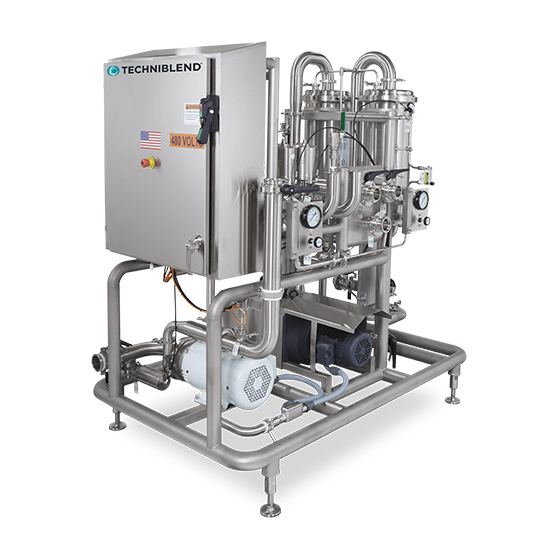
One of the most significant shifts in modern deaerator design is the move away from liquid ring designs to Dry Running Vacuum Pump technology.
In older systems, liquid ring pumps required constant seal water—a utility cost that adds up to thousands of gallons over a production year. The dry vacuum pump eliminates seal water usage entirely. From an engineering standpoint, it is “all benefit,” offering a simplified maintenance schedule and a significant reduction in the facility’s water footprint.
Troubleshooting the Filler: Is it the Valve or the Gas?
When foaming occurs at the filler, the filler is usually the first thing blamed. However, the culprit is often “trapped” oxygen.
How to tell the difference:
- The Valve Test: If foaming is isolated to one specific valve or a single series of valves, you likely have a mechanical issue with the filler head.
- The Systemic Test: If foaming is consistent across all heads, it’s a chemistry issue.
Oxygen reduces the solubility of CO2. When a container moves from the high-pressure environment of the filler bowl to the atmospheric pressure of the room, trapped oxygen causes the CO2 to “crash” out of solution, leading to excessive foam. By systematically testing DO levels from the deaerator to the blender and finally the filler bowl, you can identify exactly where oxygen might be re-entering the stream.
Precision deaeration isn’t just about oxygen removal; it’s about stabilization. By utilizing the physics of surface area and the efficiency of dry vacuum technology, beverage producers can ensure that their carbonation is precise, their product is stable, and their utility bills are kept in check.
Leave a Reply