
In the rapidly evolving beverage industry, the transition from traditional batch processing to modern inline systems is no longer just an upgrade—it is a strategic necessity. As craft brands scale to industrial volumes and consumer trends shift overnight, producers must find ways to increase speed without sacrificing the delicate quality of their premium ingredients.
What are the most common misconceptions about transitioning to inline carbonation?
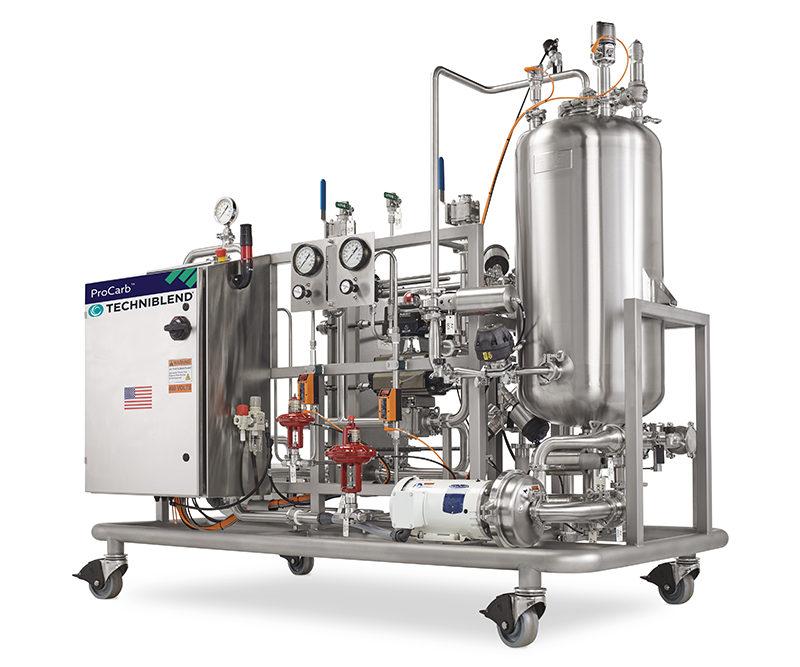
Many producers hesitant to move away from traditional batch carbonation often worry about the complexity and cost of new equipment. Most clients find the transition leads to “new realizations” rather than complications.
The most significant “hidden” benefits include:
- Floor Space Optimization: Inline systems have a remarkably small footprint. Beyond the compact machinery itself, they eliminate the need for extra holding tanks, which are massive space consumers.
- Drastic Utility Savings: Traditional tank carbonation involves “bubbling” CO2, where a high percentage of the gas is lost out of the top of the tank. Inline systems inject only the precise amount of CO2 required, significantly reducing waste.
- Rapid ROI: By combining CO2 savings with the reduced time needed to move product through the facility, many operations see a return on investment in a very short window.
How does precision carbonation impact the scaling of Ready-to-Drink (RTD) beverages?
The “craft boom” has introduced highly complex RTDs with varying viscosities and flavor profiles. For these products, getting the carbonation right the first time is essential for maintaining consistency and getting product out the door faster.
TechniBlend utilizes industry-leading controls and meters to ensure that even the most diverse product lines maintain exact carbonation levels. This flexibility allows producers to partner carbonation with blending or batching applications, creating a seamless, automated flow.
Beyond the Carbonator: Identifying Hidden Bottlenecks
When auditing a processing line, the inefficiencies often lie upstream or downstream of the actual carbonation unit. Scaling from local to national reach requires a holistic look at the facility.
| Bottleneck Area | Common Inefficiency | TechniBlend Solution |
| Ingredient Mixing | Inefficient manual batching of solids and liquids | Automated batching systems for faster product creation |
| Oxygen Management | High dissolved oxygen (DO) levels causing shelf-life issues | Integrated deaeration to ensure product suitability for cans |
| Product Movement | Relying on hoses and jumpers across the building | Facility-wide automation and efficient piping layouts |
The TechniBlend Difference: Precision Over Commodity
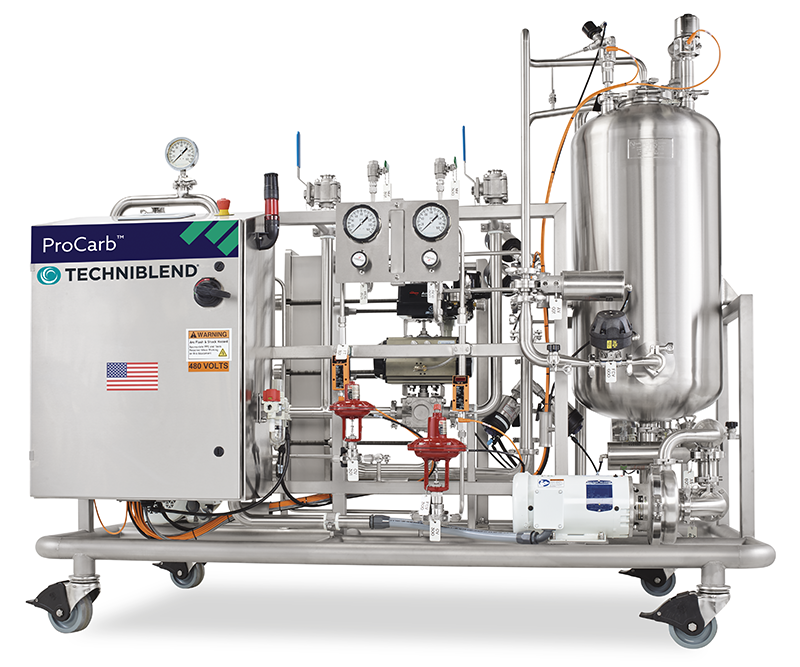
In a market filled with generic industrial carbonators, the difference lies in the balance of speed and delicacy. While a simple “stone in a tank” might provide basic carbonation, it lacks the repeatability and accuracy of an automated solution.
By reducing man-hours, energy consumption, and product waste, premium inline technology allows operators to interact easily with the machinery while ensuring every batch is identical to the last.
Looking Ahead: The Next Five Years
The single biggest challenge facing beverage processors through 2031 will be the dual demand for speed and adaptability. Co-packagers and large brands know that speed is money. However, as consumer trends change almost daily, the ability to pivot production lines to new flavors or beverage types is what will define the market leaders. Inline carbonation is the cornerstone of this adaptable future.
Leave a Reply